






Over the years, I’ve spoken with many executives and tech CEOs where they’ve said one of the following:
- “We’re not growing fast, but we’re still profitable.”
- “We’re not rocking the boat because our core products work.”
- “We’re in a good spot now and we don’t want to overextend ourselves.”
- “We’re going to wait until we need to make a change.”
The belief to stay in place is seductive because it often is perceived as a safe choice, but this is a myth.
What Is the “Good Enough” Line?
In martial arts, it’s the moment when survival is no longer urgent. A student is skilled enough to defend, escape, and manage most situations. They have sufficient awareness to follow the 1st rule of self-defense, which is avoidance. So, they don’t walk down dark alleys at 3am.
For tech CEOs, the “good enough” line is psychological. The company is no longer bleeding and cash flow is under control. Customers are being served and employee retention is stable. Growth hasn’t vanished, it’s only slowed. There’s no fire to put out and there’s sufficient energy left to look up periodically.
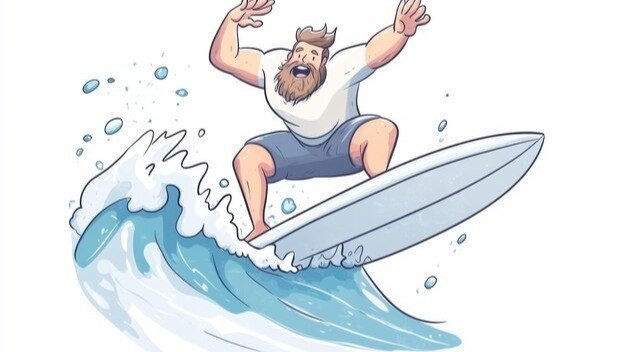
However, like riding a wave crest, if you’re starring at the board instead of the horizon and the surrounding water landscape, the probability of a nosedive into the surf is strong.
The Real Risk of Coasting
Coasting implies forward movement without concern or effort. But markets are dynamic, and coasting is just a slower version of falling behind.
There are three core risks to face on the “good enough” line:
Lost Compounding because you stop investing in what’s next so you interrupt the compounding curve. This is momentum that’s challenging to restart once stopped.
Cultural Drift because “good enough” is a virus that infects the team. Risk takers become quiet and new hires absorb caution instead of conviction and commitment. Your culture drifts from growth to preservation and eventually attrition.
Invisible Decay because the rot unfolds quietly. Upgrades get deferred or the team neglects customer feedback to improve and churn signals linger. Erosion comes from the inside.
CEOs don’t always notice because they’re schedules are still packed, until the damage runs deep. But the symptoms show up in subtle ways. Sales flatten and seasonality get the blame, big features get pushed back, top performers grow frustrated, marketing campaigns get cautious, and everything moves slower.
Like deteriorating human health, failure typically unfolds slowly.
What Mastery Demands
In martial arts, a true black belt never stops training. Not because they fear being beaten, but because they honor the path of ever-growing awareness. In business, the path is progression. It’s the discipline of refining what works and making room for what’s next. The goal for a CEO and their team is expansion mentally, pragmatically, and on the balance sheet.
Instead of asking, from a position of vague anxiety:
Are we safe?
The better question is:
Are we still growing wiser, sharper, and stronger?
Too many tech CEOs and founders fall in love with the architecture of what they’ve built. They forget the mission isn’t to defend the physical structure of the castle. The “good enough” line tempts you to slow down, polish the floors, and admire the walls. Instead, the mission is to have a place of living practice, not frozen prestige.
The “good enough” line is a signal that a level of organized achievement has been successfully obtained. Celebrate that. Then, move forward with a new growth plan, rooted in commitment and conviction to ride a new wave of success.
Just like in martial arts, the belt you wear today reflects what you’ve rightfully earned. Not what you’re still becoming. Mastery isn’t static and neither is your leadership and role as a tech CEO.
If this perspective resonates with you, contact me on LinkedIn or at scott@purplefinchgroup.com
Contact me HERE if you’d like to learn more about one of my 4-hour consults for tech CEOs. Schedule a free 30-minute conversation.
Stay focused. Keep disrupting. Be well.
