






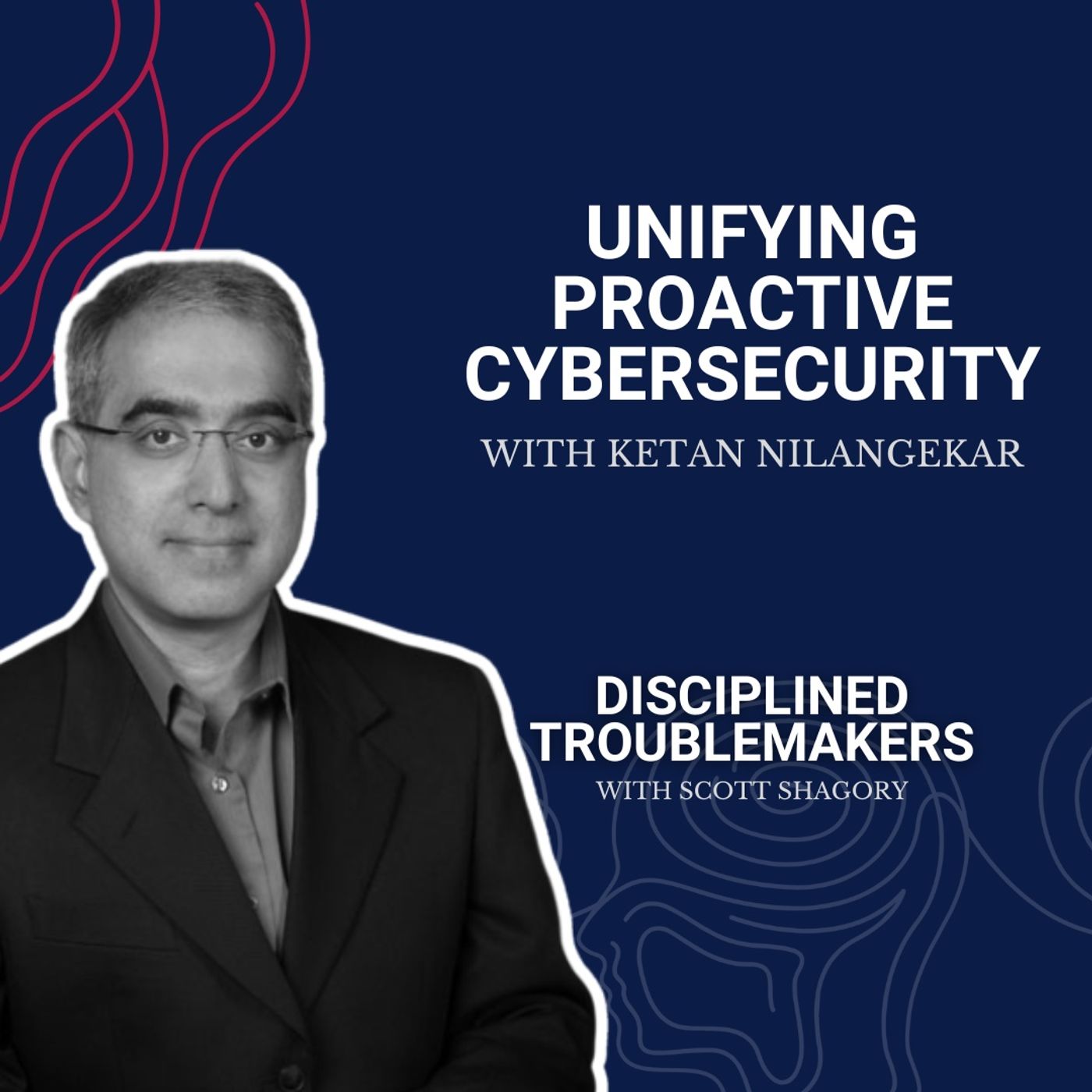
The cybersecurity landscape is reaching a critical inflection point. With over 52,000 vulnerabilities identified in 2024 alone and more than 15,000 pieces of malware disguised as legitimate software on GitHub, enterprises are drowning in security tools that don’t communicate.
I recently spoke with Ketan Nilangekar, founder and CEO of ThreatWorx, on my podcast, the Disciplined Troublemakers, about why the industry’s traditional approach to cybersecurity innovation may be fundamentally flawed.
The Point Solution Problem
The startup ecosystem has incentivized solving cybersecurity problems piecemeal. Each new threat vector spawns specialized solutions, creating what Ketan calls a “toolbox approach” that leaves enterprises with dozens of disparate security tools.
“The start-up ecosystem incentivizes innovation or solving problems piecemeal versus taking on a big, broad problem,” Nilangekar explains. “That leaves all this integration for some big player to come in and buy a bunch of smaller solutions and tie them together with spaghetti code.”
The result?
CISOs managing complex infrastructures where critical security data lives in silos, integration requires custom development, and total cost spirals out of control.
The Scale Challenge
The sheer volume of threat intelligence has become unmanageable:
- 52,000+ vulnerabilities cataloged as CVEs in 2024
- 15,000+ malware-laden projects posing as legitimate software on GitHub
- Exponential growth in attack surfaces as organizations adopt cloud, containers, and AI
“This is a problem that you can’t just throw people at and try to solve,” Ketan noted.
This is where artificial intelligence becomes essential for managing the scale of modern cybersecurity.
The Noise vs. Signal Dilemma
The most critical challenge facing CISOs is cutting through the noise. The key question every CISO faces daily:
“I heard about this new zero-day threat. Are we protected against it?”
Effective platforms must excel at noise reduction while maintaining comprehensive coverage through sophisticated correlation engines that map threat intelligence to organizational attack surfaces in real-time.
Rethinking Platform Architecture
Traditional consolidation through acquisition has fundamental limitations. True consolidation requires what Ketan describes as “rearchitecting the whole proactive security space” with a “universal scanner” approach. Rebuilding detection capabilities from the ground up with platform thinking.
A truly unified platform can:
- Adapt to new threat vectors without requiring entirely new tool categories
- Provide consistent risk scoring across different attack surfaces
- Enable AI-driven correlation impossible with siloed data
- Reduce total cost through simplified management
Strategic Implications
For security leaders evaluating their technology stack, key considerations include:
Integration Debt: Point solutions create ongoing maintenance overhead that compounds over time.
Data Fragmentation: Siloed tools prevent the cross-correlation necessary for advanced threat detection.
Skills Gap: Specialized tools require expertise that’s increasingly difficult to hire and retain.
Organizations should evaluate platforms based on native integration, AI readiness, adaptability, and demonstrated ability to reduce alert fatigue.
As Ketan puts it: “This problem is not going to be solved by plugging your existing solutions into a dashboard. Perhaps you need to rethink this whole approach of having a toolbox to solve all this.”
The question for tech CEOs and enterprise security leaders isn’t whether consolidation will happen, it’s whether they’ll be proactive participants or reactive victims of it.