




At some point, most founders begin to think differently about the companies they are building.
In the early years, the focus is necessarily immediate: product-market fit, early customers, reliable revenue. Later, attention shifts toward growth rate, hiring, and market position.
Eventually, another set of questions begins to surface, often quietly and without urgency.
- How durable is what we’ve built?
- How dependent is performance on a few key people?
- Could this company sustain its trajectory if I stepped back?
These questions are not always about selling. They reflect a growing awareness that strong companies and durable companies are not always the same.
Sophisticated buyers understand this distinction clearly. When they evaluate a business, they are not only assessing current revenue or growth potential. They are assessing structural integrity – what has been built, how it functions, and whether it can continue to perform without constant reinforcement from its original architect.
From the outside, many founder-led companies appear highly attractive. Revenue is growing. Customers are engaged. The team is capable. Yet buyers look beyond visible performance to understand how that performance is produced:
- Is value creation consistent and repeatable?
- Are margins durable under pressure?
- Can leaders make decisions using shared standards rather than personal interpretation?
These questions shape valuation more than most founders expect.
Revenue attracts interest. Durability commands multiples.
A company whose success depends heavily on founder intuition may be impressive, even profitable. But to an acquirer, it can resemble a remarkable structure without fully documented plans. Beautiful and functional, yet difficult to extend or replicate.
Valuation is a structural confidence equation.
When value resides primarily in the founder’s judgment or relationships, risk remains concentrated. When value is engineered into the system, confidence increases. Buyers can see how decisions are made, how customers are won, and how delivery maintains consistency. The company begins to look less like a personality-driven success and more like a well-designed structure capable of supporting additional weight.
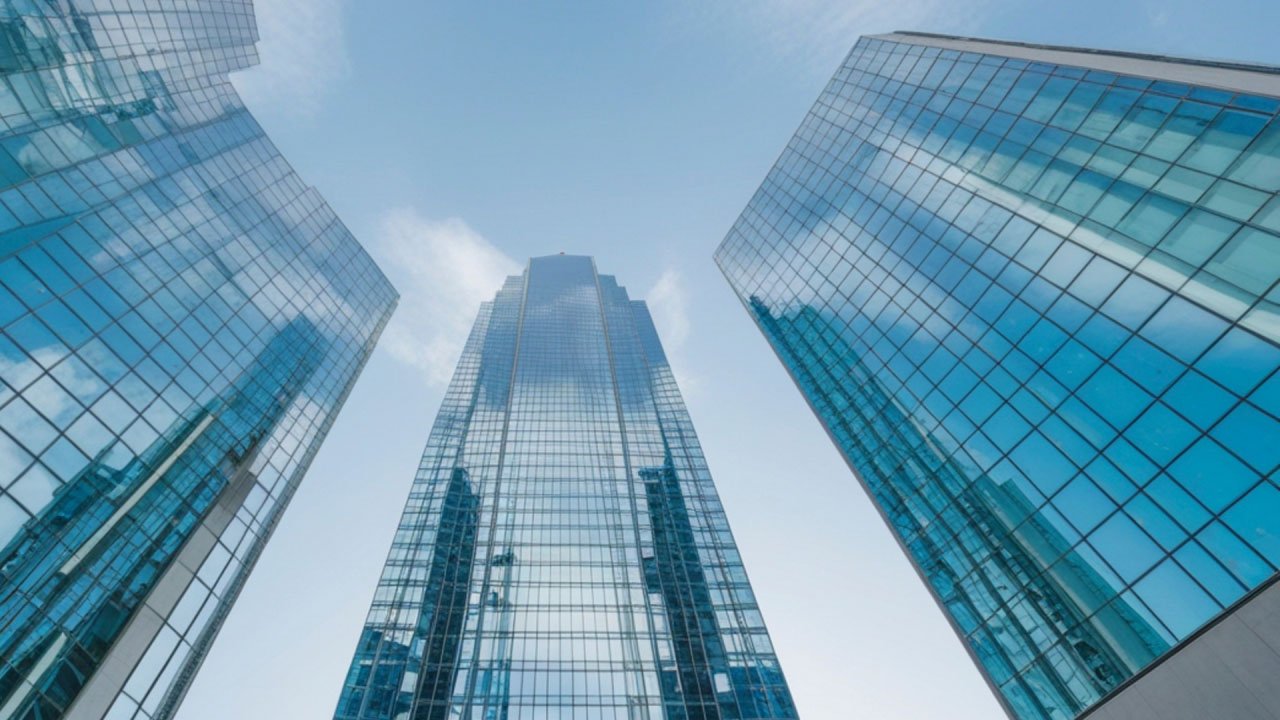
In architectural terms, the question is simple:
Will the building stand and continue to perform without the original architect present?
The highest-valued companies answer that question clearly. They demonstrate that sales wins for consistent reasons, that delivery follows defined standards, and that leadership can operate effectively using shared decision logic. Forecasts are driven by process rather than optimism. Margins hold because complexity is intentionally disciplined. Growth appears not only achievable, but dependable.
Effort-driven growth can produce impressive results. Engineered structure produces durable results. Durable results reduce perceived risk and reduced risk is what expands valuation.
A useful reflection for any founder at this stage is to imagine stepping away from daily operations for sixty days. Not permanently, but long enough for the organization to rely on its own systems.
Would performance remain steady? Would decisions continue to move? Would customers experience the same level of clarity and confidence?
An honest answer to that question offers a clearer indication of structural readiness than almost any financial metric.
This realization does not require immediate action. Many founders are years away from considering a transaction of any kind. But understanding how durability is perceived and how it is built changes how leaders think about the work in front of them. It shifts focus from short-term performance alone to the underlying design that makes performance sustainable.
Durability is what sophisticated buyers ultimately recognize and reward.
This is often the stage where founders begin to move, quietly, from builder to architect. From the person holding everything together to the one ensuring it can hold together without them.
If you find yourself thinking more about durability, leverage, and long-term structural value than you did a year ago, that’s a natural evolution. Many founders reach this point once the business is strong enough to consider what it might become beyond its current form.