






The Quiet Forces of Value
When CEOs talk about value, they often default to features, pricing, or ROI slides. But those are surface level signals. What really drives faster, easier scale is mastering the subtext of value. These are the parts your investors, clients, and prospects may not articulate but absolutely feel. The goal is about unlocking the hidden dimensions of value that create clarity, reduce friction, and accelerate growth.
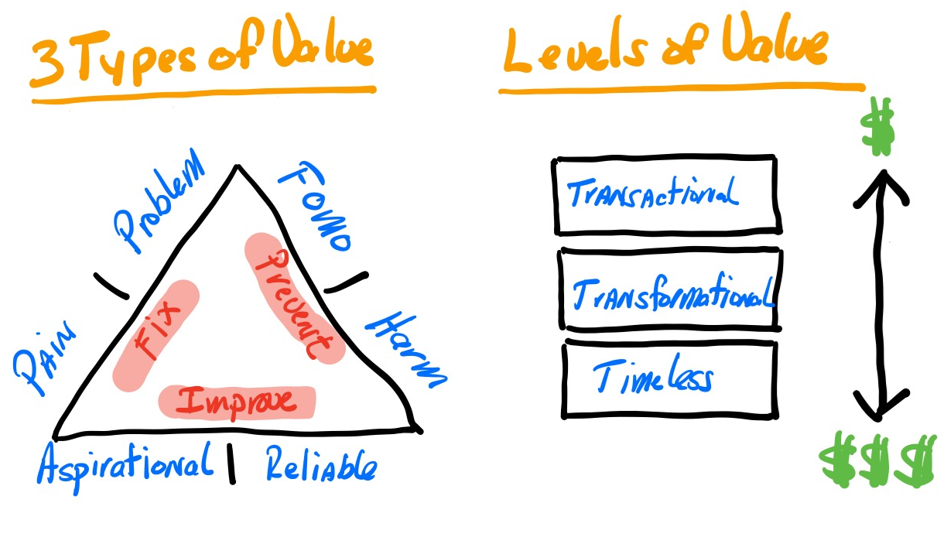
The Three Types of Value Every Prospect Seeks
Let’s start with the three ways your prospects and clients experience value. Each one triggers a different form of trust, urgency, and willingness to engage.
- Fix Value: Solving Today’s Pain
This is the “my house is on fire” kind of value. Your customer has a clear, present problem and wants it solved quickly and predictably. CEOs who lead with a strong “Fix” narrative win attention fast, but risk being commoditized if they stay here too long.
- Prevent Value: Guarding Against Tomorrow’s Risks
Prevention value is about helping your client avoid pain, loss, or FOMO. This is near-future protection: the cyber breach that doesn’t happen, the churn that’s stopped before it begins, and the opportunity they don’t miss. Preventive value elevates your positioning from reactive vendor to proactive partner.
- Improve Value: Making the Future Brighter
Improvement value is aspirational. It’s about making something better, more reliable, and more enduring. This is where CEOs sell confidence, momentum, and the story of a brighter tomorrow. Improvement isn’t about fixing weakness. It’s about amplifying strength and opportunity.
A prospect doesn’t always tell you which of these they’re seeking, but one or more is always in play. Your job is to read the subtext and align your narrative accordingly.
The Three Levels of Value That Shape Trust
Beyond the type of value, the level of value you deliver defines how deeply you connect with the client and how long the relationship lasts.
- Transactional: Features, Specifications, and Functionality
This is where most tech companies get trapped. You’re selling speeds, feeds, and features while your prospects are trying to solve deeper challenges. Transactional positioning commoditizes your offering and creates price-sensitive relationships.
- Transformational: Clear Benefits and a Brighter Future
You’re not just fixing their CRM integration, you’re enabling seamless customer experiences that drive revenue growth. You’re not just preventing security breaches, you’re building the foundation for trusted market leadership. This level connects your solution to meaningful business outcomes.
- Timeless: Future Proofing Clients and Circumstances
At this level, you don’t just solve today’s problem or tomorrow’s challenge. You’re permanently shift the client’s environment. You give them confidence that they’ll stay ahead no matter what the market does. Timeless value is where trust becomes unshakeable.
Why These Dimensions Are Hidden
Most CEOs and their teams focus on the visible: product roadmaps, ARR targets, and pipeline velocity. But value is felt before it’s measured.
- A prospect “feels” safety before they sign a contract
- An investor “feels” momentum before they fund the next round
- A customer “feels” seen before they renew
That’s why these dimensions matter. They shape the invisible currents that carry deals forward, reduce friction, and open doors that brute-force sales and marketing can’t.
Why These Dimensions Matter for Scaling
First, market resilience. When you understand your value dimensions, your offering becomes market-agnostic. Whether the economy is booming, stagnant, or struggling, you’re solving problems that exist regardless of external conditions. Your service learns to “love their problem” no matter what’s happening in the broader market.
Second, pricing power. Companies operating at the transactional level compete on price. Those delivering transformational value command premium positioning because they’re solving problems worth paying for. Decoding for the timeless and what was completely unexpected, commands the highest price.
Third, scaling velocity. When your value proposition is crystal clear and aligned with your market’s deepest needs, your sales cycles accelerate, your customer acquisition costs decrease, and your retention rates soar.
Questions That Unlock Your Value Architecture
If you’re feeling the drag of friction of longer sales cycles, harder closes, and inconsistent renewals, it may not be your strategy or your product. It may be the way you’re framing value.
Ask yourself:
- Am I only solving pains (Fix), or am I also preventing risks and improving futures?
- Am I stuck in transactional pitches, or am I creating transformational and timeless stories?
- Do I love the problem enough to frame my company as essential, regardless of the market cycle?
Scaling with flow comes when you expand beyond the obvious and learn to navigate the hidden.
Your scaling strategy isn’t just about building better products or hiring more salespeople. It’s about architecting value in ways that create unstoppable momentum in any market condition.
If this perspective resonates with you, contact me on LinkedIn or at scott@purplefinchgroup.com
Contact me HERE if you’d like to learn more about one of my 4-hour consults for tech CEOs. Schedule a free 30-minute conversation.
Stay focused. Keep disrupting. Be well.