





Performance doesn’t come from activity at scale. It comes from alignment.
There’s a scene in a recent F1 film where Brad Pitt’s character describes what it feels like to sit in the cockpit. It’s not the speed or the danger. What makes it special is the stillness.
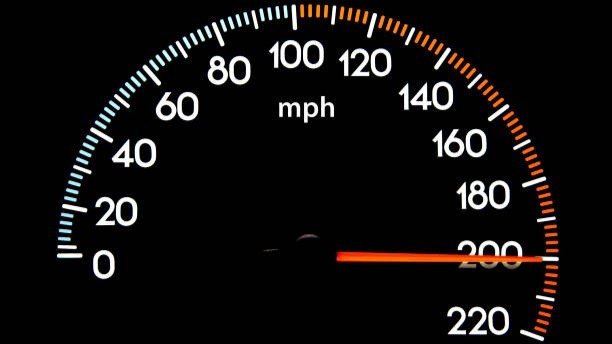
At 200 miles per hour, surrounded by noise, pressure, and consequence, there is a kind of quiet. A oneness with the machine. A complete absence of internal friction where everything unnecessary falls away. What remains is now and awareness.
Most founder-CEOs rarely experience this state. Not because their environment is less intense, but because their internal state is most focused on what’s urgent instead of what is most important.
In the early days, decisions are fast because they are clear. Priorities don’t need to be negotiated. Action feels direct and there is little distance between what they see and what they do. They are, in a very real sense, in the cockpit.
As the company grows, something subtle begins to change. Complexity increases, which is expected. But alongside it comes something less visible and that’s noise. More people, more opinions, and more motion that begins to resemble progress. Calendars fill, decisions multiply, and the energy inside the company rises.
Yet, clarity does not rise with it.
From the outside, the company appears to be accelerating, but from the inside, pressure builds. Not enough to trigger alarm, but enough to create friction. Decisions take longer than they should, and teams hesitate in moments that once felt obvious. The founder becomes more involved, not less, even as the organization expands.
Stillness is not the absence of activity. It is the absence of internal conflict. Stillness shifts effort into ease and flow.
Yet for most founder-CEOs, they’re no longer in the cockpit. They are being pulled by the momentum of the business rather than directing it. It can feel like leadership because it is active and demanding. But underneath, it is drift and experienced as frustration.
The key is to design company activities so that decisions have a clear home, information moves without distortion, and teams act with confidence rather than hesitation. The difference is the quality of experience because much of what needs to be done becomes clear.
Early in my hardcore meditation practice, I learned of British philosopher Rupert Spira’s concept of the “pathless path.” One of its lessons is that something isn’t achieved by adding more. Instead, the action taking is to remove what is not true.
Thus, the question isn’t about whether to move fast and take massive action – all from a position of lack and limitation. The deeper question was whether that movement is aligned with what is truly desired and from fulfillment.
Are you in the cockpit, fully aware and in command of the system you’ve built or are you responding to the motion around you, adjusting in real time to forces that no longer feel fully within your control?
Most founders don’t lose capability as they scale. They lose alignment. And when alignment erodes, everything else – speed, performance, even valuation – begins to shift with it.
So, if cockpit fatigue and noise feel familiar, it is worth looking more closely. Not at what needs to be added, but at what must be redesigned so that clarity and stillness return.
Speed Is Not the Signal
Most founders don’t slow down when things get harder.
They add.
More meetings.
More oversight.
More force.
It looks like leadership.
But it’s often compensation.
Because the ability to see clearly and move decisively without friction has been lost.