






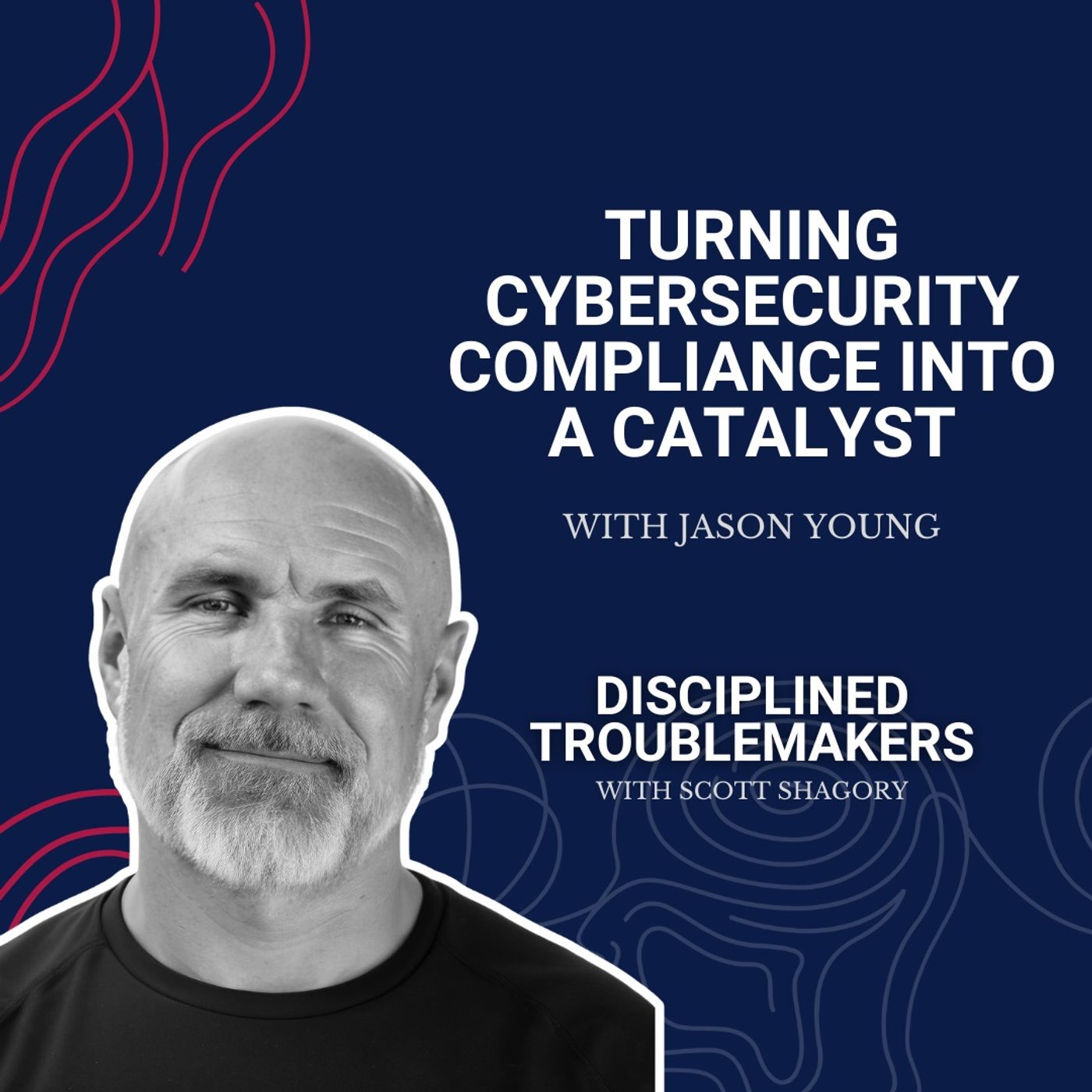
In cybersecurity, the conversation too often starts with fear.
Budgets are allocated reactively. Audits are endured. And frontline IT staff brace for impact, knowing they’ll have to slow down, jump through hoops, and prove their work to outsiders who often don’t understand it.
Jason Young, CEO of Pylon, has a different take.
In our latest episode of the Disciplined Troublemakers Podcast, Jason shared how he and his team helped the Defense Health Agency (a massive entity inside the U.S. Department of Defense) save $25 million by doing one thing most companies fail at: reducing burden.
Not security theater. Not extra dashboards. Real, measurable time and cost savings.
How?
By talking to the people who do the work.
Not the executives. Not the compliance officers.
But the sysadmins, network engineers, and ops teams whose workflows are directly affected by compliance initiatives.
Jason’s origin story is part technician, part auditor. He’s seen both sides of the house. That’s why his company doesn’t treat compliance as an abstract policy. They see it as an operational bottleneck that can be untangled if you listen to the right people.
“We make RMF suck less,” was their internal motto at a DOD trade show. They printed the phrase on a mug.
It disappeared in under an hour. Because everyone in the room felt it.
Jason’s team didn’t just automate tasks or streamline reports. They asked:
What if we just stopped doing things that didn’t add value?
Sometimes, solving a problem means doing less.
That principle, burden reduction, is central to Pylon’s success. By removing friction from IT operations, they freed up hours and improved morale. Compliance stopped feeling like an enemy. It became part of the job, not a disruption to it.
This is where the conversation shifted into leadership.
Jason isn’t a command-and-control CEO. He’s a student of culture, autonomy, and alignment. He talked about hiring subject matter experts and giving them room to work. About measuring outcomes, not effort. About thought work and the mental “spring” that can wind too tight without recovery.
That’s where motorcycles and martial arts came in. Both force you to be present. Both remind you to unwind. And both offer the kind of clarity that can’t be scheduled or micromanaged.
At the end of the day, Pylon isn’t just selling cybersecurity software.
They’re offering relief. For burned-out teams. For overburdened systems. For organizations that know compliance is important, but don’t know how to make it work without grinding their people into the ground.
And Jason’s reminder is a powerful one:
Culture eats policy for breakfast.
Burden is the red flag. Value is the fix. And sometimes the smartest move isn’t more AI or automation, but simply asking:
“What if we stopped doing this altogether?”
—
Want to hear the full conversation? Listen to the episode on the Disciplined Troublemakers podcast or connect with Jason at pylonsecure.com.