






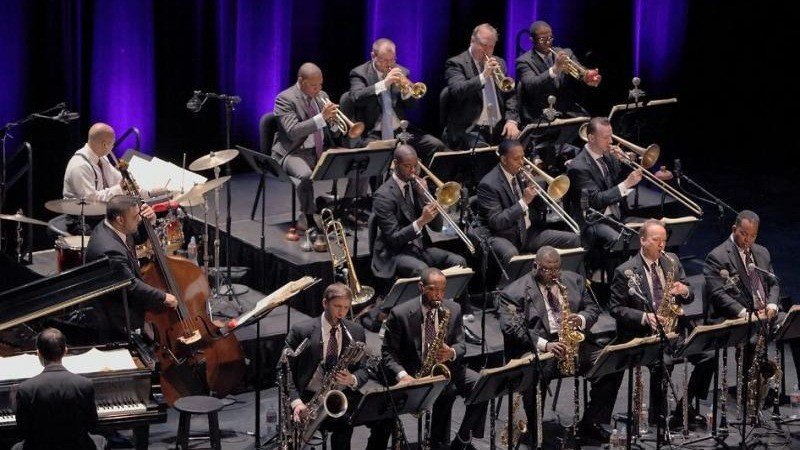
Last August I spent an evening at Wolf Trap, outside of Washington, DC, and had the privilege of watching Wynton Marsalis and the Lincoln Center Jazz Orchestra perform.
What struck me most wasn’t the music, which was fantastic. It was the leadership on display.
Marsalis didn’t take center stage.
He sat in the back row, conducting the entire experience with subtle authority.
The real mission was about the music, the team, and the audience.
The performance offered something tech CEOs too often forget, which is that real leadership is less about commanding attention and more about creating space for others to lead.
What Marsalis Got Right and What Many CEOs Miss
Wynton Marsalis is arguably one of the most accomplished jazz musicians of our time. He has every credential and every ounce of artistic legitimacy to dominate the stage. However, he chose to do the opposite.
He built the orchestra where excellence could emerge from many voices, not just his own.
Each member soloed.
Several led and some performed pieces they composed themselves.
Marsalis contributed only three of his own works to the set list.
From the outside that might appear modest. From the inside, it was masterful.
Many CEOs build companies that orbit around their own energy. They’re the vision and the drive behind everything. In the beginning, that may be necessary. But once a company grows, that gravitational pull can become a liability.
Just like in jazz, where every player needs space to explore, adapt, and bring their brilliance forward, scaling a tech company requires a CEO to stop soloing and become the orchestrator.
Back Row Leadership
Where Marsalis sat spoke of presence, creativity, and mastery.
In martial arts, the most skilled instructors often take a quiet, unassuming role in the dojo. They don’t need to be loud and they don’t need to perform. Instead, their presence is felt in each lesson and session.
Marsalis brought the same energy to the bandstand. Unassuming on the surface, yet deeply intentional three rows back from the upper deck.
Too many CEOs try to lead from the front of every room. They host every meeting, approve every decision, and solve every fire that pops up.
Genuine mastery shows up differently. For a CEO, they know when to step back and let others shine, learn, and even struggle in safety. They’re building capacity for scale without dependency and hero worship. There’s a sense of shared ownership where motivation, alignment, and outsized performance are born.
Marsalis wasn’t relinquishing control. He was expanding what was possible on that night’s canvas.
For CEOs, this can feel risky because they’ve often built their companies through sheer willpower and relentless oversight. However, they hit a wall as the sole conductor and can’t improvise and create space for new movements.
Discipline Behind the Freedom
It’s easy to romanticize jazz as purely improvisational. However, as any jazz musician will tell you, the freedom you see and hear on stage is built on enormous levels of discipline behind the scenes.
At Wolf Trap, every musician wore a tailored navy suit with a burgundy striped tie. Nothing flashy or grandiose. Just a tight ensemble of elegant coordination.
Their visual discipline told the story before a single note was played.
We see something similar in high performing technology teams. They look agile in an effortless way and that’s built on internal structure and alignment, high standards, and clarity.
Anchoring the relationship between discipline and freedom means:
- Freedom without discipline creates chaos
- Discipline without freedom creates rigidity
- Combine the two and you get ease and flow
For CEOs, this means designing systems where team members understand the rhythm of execution while having the space to interpret, adapt, and lead.
Harmony Over Uniformity
The other lesson from the evening was harmony. Marsalis’ orchestra wasn’t a group of identical players. They were a group of distinct voices brought together to share and celebrate.
Each solo was different. Some were bold and some were more understated. A few went off script, but all returned to a shared theme. All were in working in service of something greater than themselves.
In scaling companies, there’s a powerful temptation to seek uniformity. To hire for alignment, to document to the last degree, and expect everyone to “play to the same notes and tune.” In other words, grind to the finish, which ideally is a strong exit and a permission slip to feel good.
But harmony is more powerful than uniformity. Harmony is secure and it invites contrast, layering and texture. Riffs are expected, if everyone is attuned to the shared purpose.
Accomplished CEOs don’t stamp out individuality. They create and nurture systems where it can resonate through and in between each note.
The Music Between the Notes for CEOs
You may not lead a jazz band on stage, but you are conducting a performance. Your company will only scale to the extent your team can carry a tune without you.
So ask yourself:
- Are you a soloist or an orchestrator?
- Do your leaders have to make decisions or are they waiting for permission to riff?
- Is your company designed for harmony or control?
Wynton Marsalis showed me that world-class leadership doesn’t need the spotlight.
World-class leadership needs trust, restraint, creativity, and the discipline to listen.
So at your next all hands meeting, take a seat in the back row and let your ensemble’s music emerge at full volume.
If this perspective resonates with you, contact me on LinkedIn or at scott@purplefinchgroup.com
Contact me HERE if you’d like to learn more about one of my 4-hour consults for tech CEOs. Schedule a free 30-minute conversation.
Stay focused. Keep disrupting. Be well.
